What Is a Riad? Exploring Morocco’s Traditional Courtyard Homes
Morocco’s riads (also written ryads) are among the most evocative symbols of the country’s architectural heritage. These inward‑facing houses, built around lush courtyards, were originally homes for wealthy families and have since been adapted into guesthouses that offer travelers an intimate glimpse into Moroccan culture. This guide explores the meaning of “riad,” its history and architecture, how these homes function, why they’ve captured the imagination of travelers, and what to expect if you stay in one.
What Is a Riad?
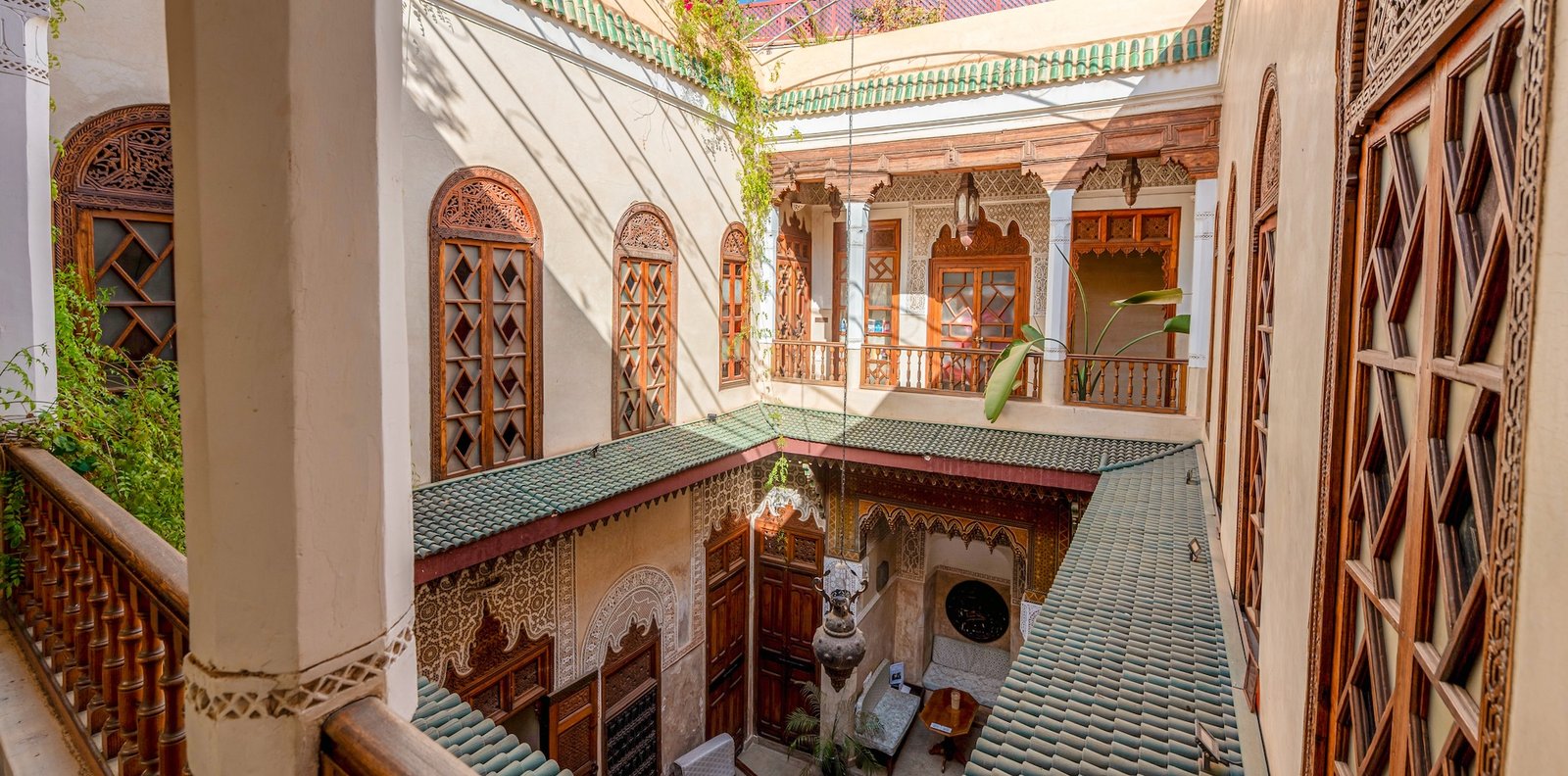
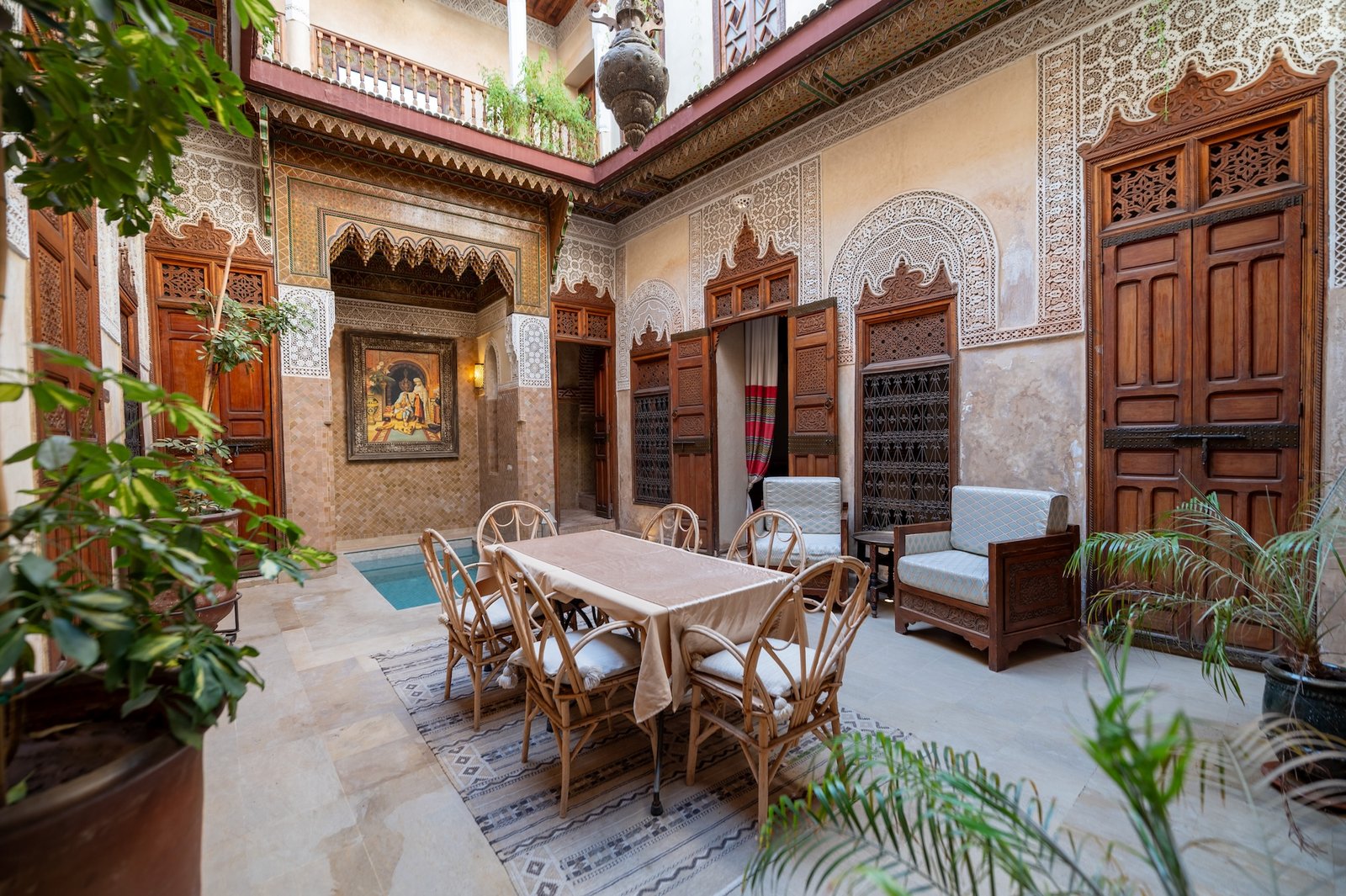
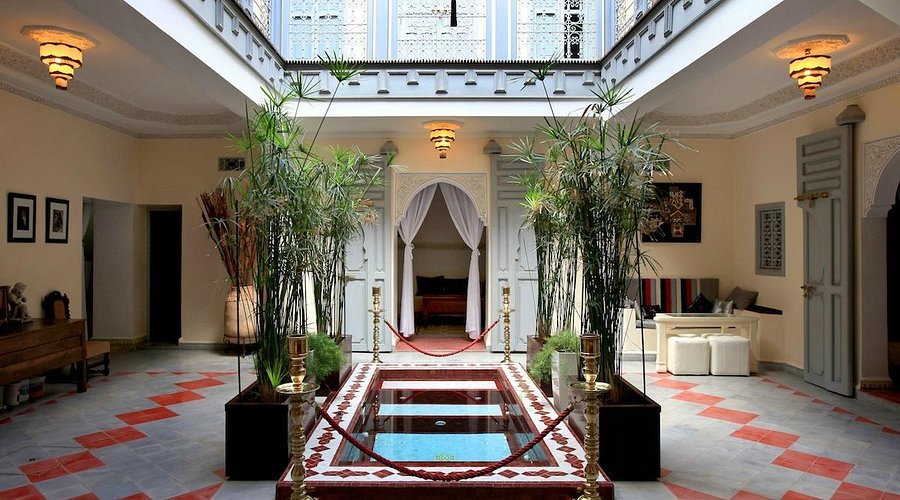
A riad is a traditional Moroccan house or palace built around an interior courtyard or garden, usually located inside the historic medinas of cities like Marrakech or Fez. The rooms of the house face inward toward this central courtyard, which often includes trees, plants, and a fountain designed to create a peaceful micro-climate away from the busy streets outside.
The word riad comes from the Arabic “ryad” (رياض), which literally means “garden.” Historically, the term referred to interior garden courtyards used in Islamic and Andalusian architecture. Over time, it came to describe the entire house built around this garden structure.
In traditional Moroccan architecture, a riad differs from a dar, another type of house common in the medina. A dar typically has a central patio but not necessarily a garden, while a riad is specifically organized around a planted courtyard designed to resemble a small paradise garden.
The central courtyard is the heart of the home. It provides shade, greenery, natural ventilation, and a fountain that helps cool the air, creating a calm oasis within the dense urban environment of the medina.
In Arabic and Berber cultural symbolism, gardens represent paradise and harmony, which is why riads were designed to evoke tranquility, privacy, and abundance within the home.
Origins and Historical Context
Roots in Islamic‑Andalusian Design
Riad architecture emerged from the exchange of ideas between the Maghreb (North Africa) and al‑Andalus (medieval Muslim Spain). Early Islamic builders drew inspiration from the Persian chahar bagh (four‑part garden) design, which divides a courtyard into quadrants with a central fountain. Moroccan artisans adapted this concept into houses with inward‑facing rooms and a garden in the middle. The earliest documented riad garden in Morocco dates to the Almoravid palace in Marrakesh, built in the early 12th century.
Built for Privacy, Comfort and Status
Riads were initially constructed by notables who prized privacy. High exterior walls with minimal or no windows shielded family life from the street, while rooms faced the courtyard to admit light and air. A fountain at the center and surrounding gardens created a cool micro‑climate, with humidity and fragrance moderating the heat. During the Almohad (12th–13th century) and Marinid (13th–15th century) dynasties, these homes evolved into lavish palaces decorated with zellige tilework, carved cedar and plasterwork. The Moorish diaspora from al‑Andalus enriched riads with horseshoe arches, intricate stucco and Andalusian floral motifs. Over time, riads became status symbols for wealthy families; the most elaborate examples featured multiple floors, separate guest apartments (douiria), and extensive gardens.
Decline and Revival
By the 20th century, Morocco’s colonial period and the growth of modern cities led many riads to fall into disrepair. Starting in the 1960s and 1970s, foreign artists and designers, including fashion icon Yves Saint Laurent and his partner Pierre Bergé, purchased and restored riads in Marrakech, sparking a revival. The surge of interest continued into the 1990s as travelers sought authentic lodging within medinas (historic city centers). Today, many riads operate as guesthouses and boutique hotels. UNESCO has recognized the medinas of Fez, Meknes, Rabat, and Marrakech—cities famed for their riads—as World Heritage sites.

Understanding the Architecture
Layout: The Four‑Part Garden and Courtyard
At the heart of a riad is the courtyard garden, often divided into four beds that represent the four parts of the world. A fountain occupies the center, and citrus trees, jasmine, mint, and other aromatic plants provide fragrance and shade. Rooms on the ground floor open directly onto the courtyard, while upper stories (often accessed by narrow stairways) house additional rooms. Rooftop terraces provide views over the medina.
Materials and Decorative Arts
Riads showcase Morocco’s rich artisanal heritage. Common elements include:
- Zellige mosaic tiles: colorful geometric tiles covering fountains, walls and floors.
- Tadelakt plaster: a lime-based waterproof plaster polished to a soft sheen, used in bathrooms and façades.
- Carved cedar wood: intricately carved doors, ceilings and lattice screens (mashrabiya).
- Stucco and plasterwork: hand‑carved motifs and arabesques adorning arches and walls.
These materials not only beautify the space but also regulate temperature; thick earthen walls and minimal exterior openings insulate interiors from heat and cold. Water features and high walls create a natural ventilation system known as a thermal chimney: warm air rises and exits through the open roof while cooler air circulates below.
Privacy and Social Space
Islamic culture places a premium on privacy, especially regarding family life. Riads achieve this by turning windows inward and shielding the courtyard from the street. The courtyard becomes a safe, communal space where family and guests can gather without being observed. Separate living quarters, like the douiria, allowed homeowners to entertain guests while keeping private areas secluded. Modern sustainability research underscores how these spatial hierarchies—public entry, semi‑private courtyard, private rooms—are central to preserving riads while adapting them to contemporary needs.
How Does a Riad Work?
The design of a riad serves multiple functions:
- Climate control: Thick masonry walls insulate against heat and cold, while the open courtyard and fountain enhance air circulation and humidity, keeping the interior up to 10 °C cooler than the outside.
- Light and ventilation: Rooms open onto the courtyard, receiving indirect light from above rather than direct street exposure. Upper floors may have small interior balconies that let in light and breeze.
- Social organization: The ground floor typically houses communal spaces (salon, kitchen), while upper floors hold bedrooms. Guests are entertained in designated salons or a douiria to maintain family privacy.
- Rooftop terraces: Many riads feature terraces where residents can enjoy views of the medina, catch cool breezes and dry laundry.
Pros and Cons of Staying in a Riad
Riads have become one of Morocco’s most popular lodging options. Understanding the advantages and drawbacks can help travelers decide whether this style suits them.
Advantages
- Cultural immersion: Staying in a riad offers a direct connection to Moroccan architecture and daily life. Guests experience traditional craftsmanship, local hospitality and home‑cooked meals..
- Location in the medina: Riads are usually located inside historic medinas, placing guests steps away from souks, mosques and monuments..
- Personalized service: Many riads are small, family‑run establishments with attentive hosts who provide insider tips, arrange meals, and organize excursions.
- Tranquil environment: Thick walls and inward‑facing rooms create quiet oases that are remarkably peaceful despite the bustling medina outside.
- Architectural beauty: Intricate mosaics, carved wood, fountains and gardens provide an Instagram‑worthy setting that cannot be replicated in modern hotels.
Disadvantages
- Accessibility: Many riads lack elevators and have narrow staircases, making them challenging for travelers with mobility issues or heavy luggage.
- Limited facilities: Riads are typically small, with few rooms and modest amenities. They rarely offer gyms, business centers or large pools.
- Finding them: Medinas are maze‑like; some riads are hidden down alleys with minimal signage. Travelers may need directions or a porter to find their accommodation.
- Variability: Each riad is unique. Services, decor and cleanliness can vary widely. It’s wise to research reviews and contact the property before booking.
- Privacy concerns: The intimate scale and inward‑facing design mean sound may travel easily. Those seeking full seclusion may prefer a hotel suite.
Riad vs. Hotel: Key Differences
| Feature | Riad | Hotel |
|---|---|---|
| Setting | Located in historic medinas; often hidden behind plain doors | Usually in modern districts or resort areas |
| Architecture | Traditional courtyard with garden, fountain and rooftop terrace | High‑rise or resort‑style building with outward‑facing windows |
| Rooms | Few rooms (often 5–10), unique decor, sometimes no windows to the street | Many rooms, standardized design and amenities |
| Service | Personalized, family‑run; home‑cooked meals | Professional, standardized; buffet or restaurant service |
| Amenities | Limited; may lack elevators or pools | Often include gyms, elevators, meeting rooms and larger pools |
| Experience | Immersive cultural stay, quiet, authentic | Convenient, predictable and suitable for business or large groups |
When a Riad May Not Be Right
While riads offer charm and intimacy, they may not suit everyone. Consider a modern hotel if you:
- Require wheelchair access or an elevator.
- Travel with a large group needing many rooms or meeting facilities.
- Prefer standardized decor and amenities such as gyms, spas or business centers.
- Want Western‑style privacy and soundproofing.

Tips for Choosing and Enjoying a Riad
Choosing the right riad can make a big difference in your travel experience. Start by researching the location of the riad within the medina, as some properties are hidden deep inside narrow alleyways that can be harder to access with luggage or at night. It can also be helpful to check how far the riad is from major squares or taxi drop-off points since cars usually cannot enter the historic medina streets. Before booking, confirm essential amenities such as air conditioning, heating, Wi-Fi, and accessibility, because each riad is unique and facilities vary widely. Reading recent guest reviews is also important since service quality, atmosphere, and maintenance can differ significantly from one property to another.
Communication with the hosts is another key part of a smooth stay. Many riads can arrange airport transfers or staff to meet guests at the nearest access point and guide them through the medina, which can be helpful in the maze-like streets. Travelers should also pack light, as many riads have narrow staircases and no elevators, making large suitcases inconvenient to carry. Finally, remember that many riads are small, family-run guesthouses, so respecting local customs helps create a better experience. Dressing modestly in shared spaces, being mindful of local rhythms such as the call to prayer, and asking before photographing staff or other guests are simple ways to appreciate the hospitality and culture that make riads special.
Sustainability and the Future of Riads
Contemporary research highlights both the challenges and opportunities of preserving riads in the 21st century. Many historic dwellings suffer from material deterioration and outdated infrastructure. Scholars argue that adaptive reuse—modernizing buildings while respecting their heritage—can balance tradition with modern needs. Key considerations include:
- Respecting privacy and hierarchy: Modern modifications should maintain the spatial hierarchy (public entrance, semi‑private courtyard, private rooms) and gender‑specific privacy patterns.
- Adapting to family structures: Contemporary families may be multigenerational or smaller than those of past centuries. Flexible layouts allow riads to accommodate changing lifestyles.
- Natural climate strategies: Restorations should preserve passive cooling techniques—thick walls, fountains, ventilation shafts—while integrating energy‑efficient systems.
- Using local materials: Sustainable renovation relies on natural materials such as earth, lime plaster and wood, coupled with skilled craftsmanship.
- Tourism balance: While tourism provides funding for restoration, over‑commercialization risks turning riads into superficial tourist attractions. Policies that encourage local ownership and cultural authenticity can help maintain balance.
Experience an Authentic Riad in Marrakech
If reading about riads has inspired you to experience one yourself, the best way to truly understand Moroccan courtyard living is to stay inside a riad in the heart of Marrakech or in its peaceful surroundings. Today, many traditional riads have been carefully restored and transformed into boutique guesthouses while preserving their historic architecture and atmosphere. This growing interest in riad stays has helped revive historic homes in cities like Marrakech, Fez, and Essaouira, where many have been renovated into unique accommodations for travelers.
Through Best Life Morocco, travelers can discover three carefully curated riads offering different experiences of Moroccan hospitality: two located in the historic Medina of Marrakech and one in the peaceful countryside near the Atlas Mountains.
Stay in One of the Best Riads in Marrakech
Riad Lorsya – Authentic Medina Experience
Located in a quiet alley of the Marrakech Medina, Riad Lorsya combines traditional Moroccan design with modern comfort. Guests enjoy an intimate atmosphere, beautiful handcrafted décor, and easy access to the city’s souks and historic landmarks.
Perfect for: travelers who want an authentic riad experience in the heart of the medina.
Reserve your stay at Riad Lorsya.
Riad Dar Zaya – Calm and Intimate Medina Retreat
Riad Dar Zaya offers a peaceful escape within the Medina, ideal for travelers seeking privacy, elegance, and authentic Moroccan hospitality. The riad blends traditional architecture with a serene atmosphere, creating a quiet oasis just steps from Marrakech’s vibrant streets.
Perfect for: couples and travelers looking for a relaxing stay in the Medina.
Reserve your stay at Riad Dar Zaya.
Dar Mardan – A Countryside Riad Near Marrakech
For travelers looking for nature and tranquility, Dar Mardan offers a unique experience just outside Marrakech in the Ourika countryside. Surrounded by gardens and inspired by Arab-Andalusian architecture, this riad is designed as a peaceful retreat while remaining close to the cultural attractions of Marrakech.
Perfect for: travelers who want space, nature, and relaxation near the Atlas Mountains.
Reserve your stay at Dar Mardan.
Frequently Asked Questions (FAQs)
What’s the difference between a riad and a dar?
A dar is a house built around a central patio but usually lacks the garden and four‑quadrant layout of a riad. Dars tend to be smaller and less ornate than riads.
Do riads have swimming pools?
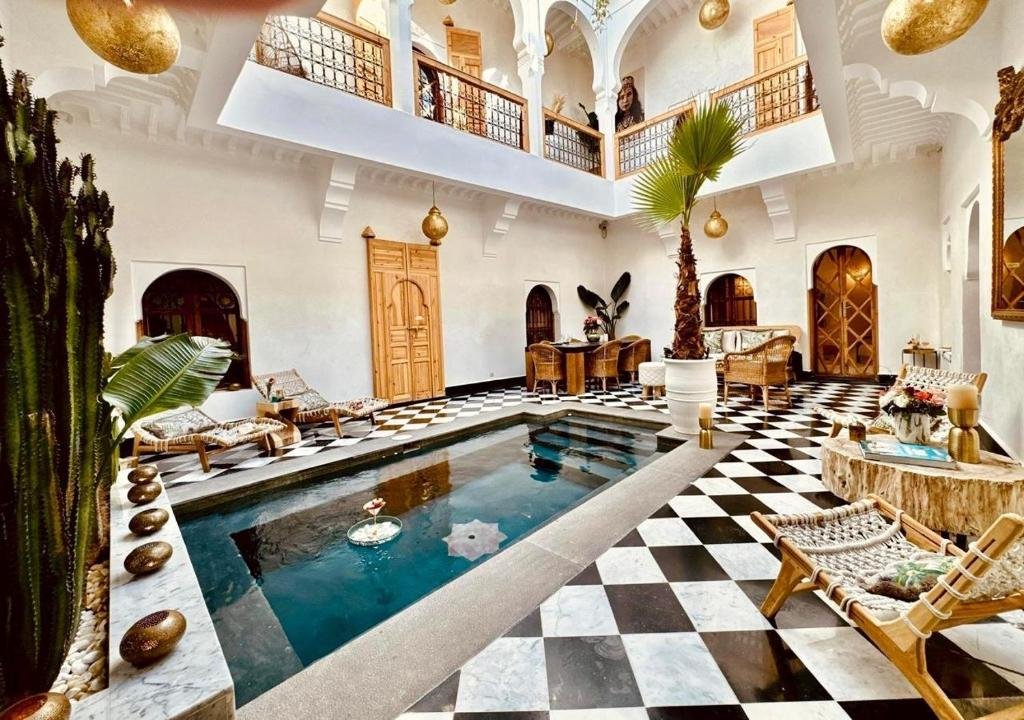
Most traditional riads were not designed with swimming pools; the central courtyard often contains a shallow fountain. Some renovated riads now include small plunge pools or rooftop pools, but this is a modern addition.
Is a riad safe?
Riads in tourist areas are generally safe. Many employ night guards or staff who live on site. As in any busy city, use common sense—lock your room, avoid carrying large amounts of cash, and ask the hosts for local safety advice.
How many rooms does a typical riad have?
Riads usually have between 5 and 10 rooms, though some larger palaces may have more. The small number of rooms enables personalized service but means popular properties can book up quickly.
Are riads expensive?
Prices vary widely. Budget‑friendly riads provide simple rooms at competitive rates, while luxury riads with elaborate decor and amenities can cost as much as upscale hotels.
Can I stay in a riad outside Marrakech?
Yes. While Marrakech is famous for its riads, similar courtyard houses exist in Fez, Meknes, Rabat and other medinas.