History of Moroccan Riads: Architecture, Origins and Cultural Heritage
Riads sit at the heart of Morocco’s historic cities. Hidden behind modest doors in the medinas of Marrakech, Fez, and other imperial cities, these traditional houses reveal a completely different world once inside. A peaceful courtyard, the sound of a fountain, and the scent of citrus trees create an atmosphere that feels far removed from the busy streets outside.
A riad is a traditional Moroccan house built around an interior courtyard or garden, often with a fountain at its center. The word “riad” comes from the Arabic term for “garden,” reflecting the architectural principle that defines these homes. Historically, riads were the urban residences of wealthy families, designed to offer privacy, natural cooling, and a quiet retreat within dense medina neighborhoods.
Understanding the history of Moroccan riads reveals much more than an architectural style. It tells the story of how Persian garden concepts, Andalusian influences, and local Moroccan craftsmanship came together to create one of the most distinctive residential designs in the Mediterranean world. Today, many of these historic homes have been restored as boutique guesthouses, allowing visitors to experience a unique blend of architecture, culture, and hospitality inside Morocco’s ancient medinas.
What Is a Riad?
A riad is a traditional Moroccan house built around an interior courtyard, often designed as a small garden with a fountain, citrus trees, or fragrant plants. The word “riad” comes from the Arabic riyāḍ, meaning “garden,” which reflects the central idea of this architectural style: creating a peaceful and refreshing natural space at the heart of the home.
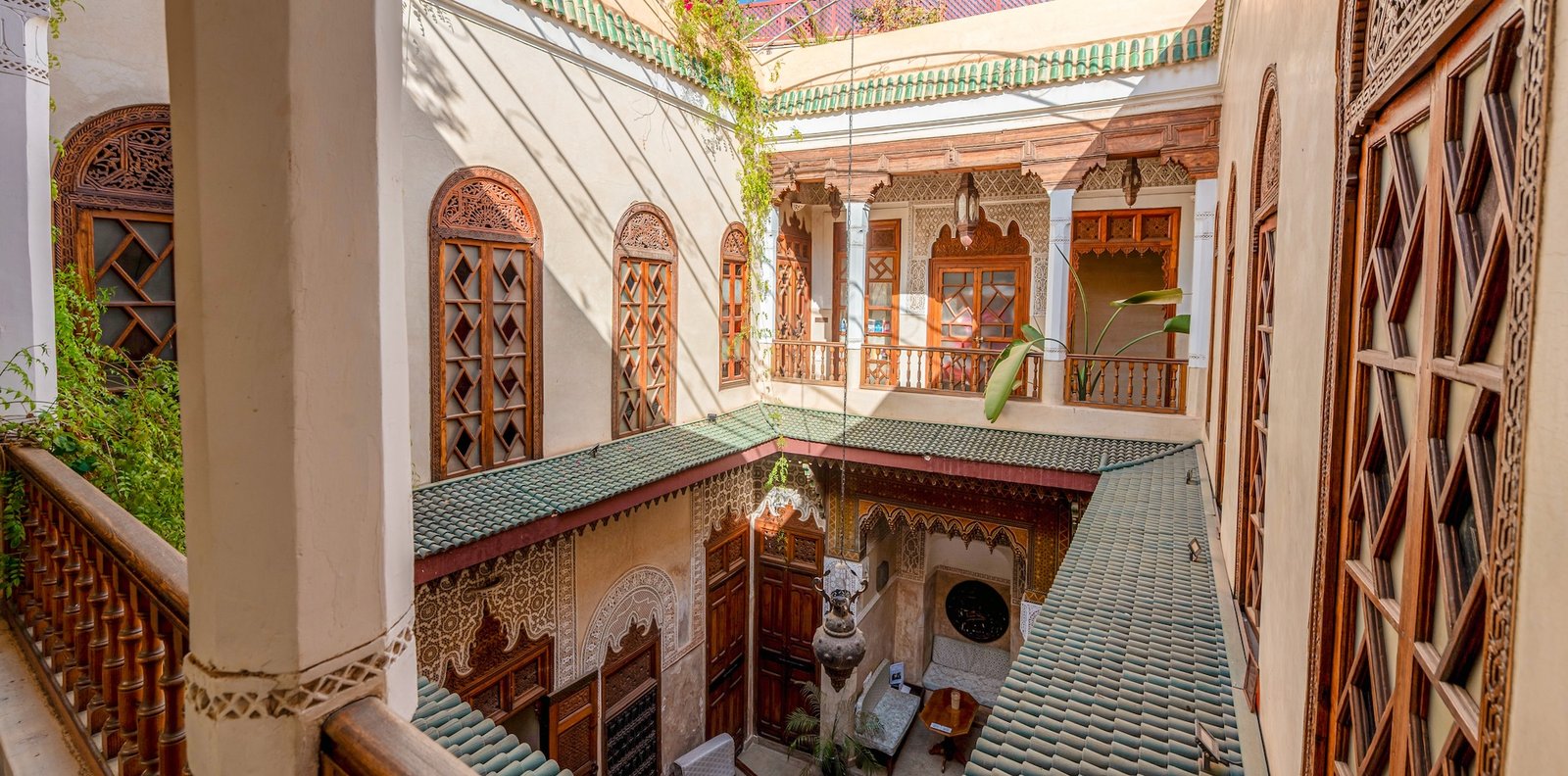
In the historic medinas of cities such as Marrakech, Fez, or Essaouira, riads are known for their inward-facing design. From the street, the exterior walls usually appear simple and discreet. But once the door opens, the house reveals a bright courtyard surrounded by rooms and galleries. This central patio brings natural light, ventilation, and tranquility, transforming the house into a quiet refuge from the busy streets of the medina.
Historically, riads were the homes of wealthy families, merchants, and urban elites. Their architecture served several important functions in traditional Moroccan life: protecting family privacy, creating a comfortable living environment despite the hot climate, and providing a shared space where family members and guests could gather around the central garden.
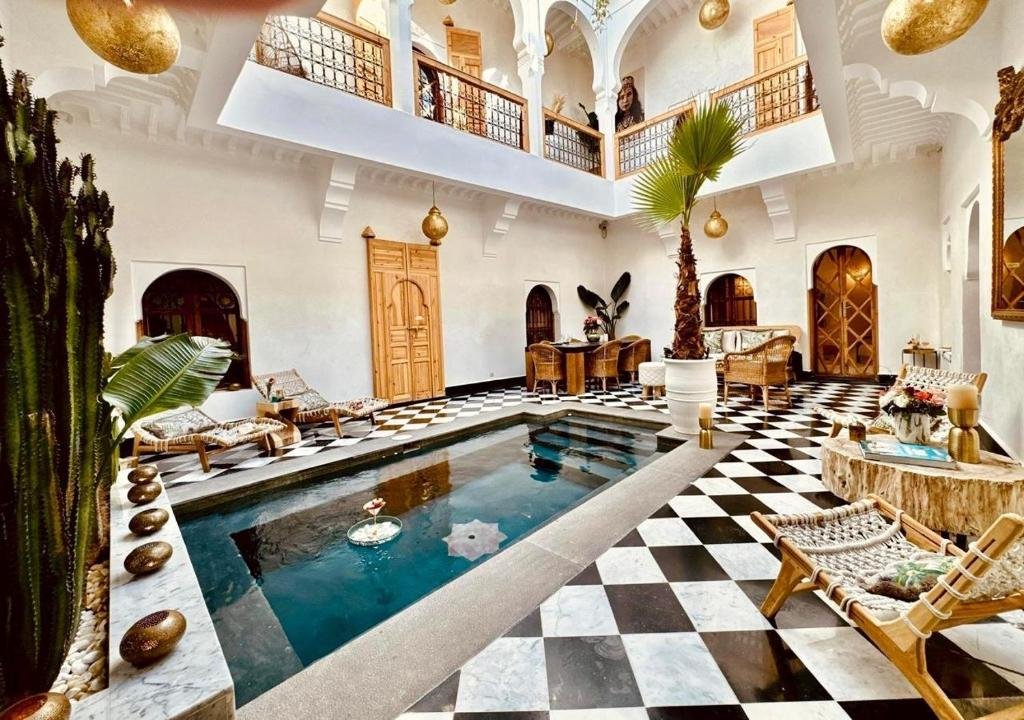
Today, many of these historic houses have been carefully restored and transformed into boutique guesthouses and charming hotels. Staying in a riad has become one of the most distinctive travel experiences in Morocco, offering visitors a chance to discover Moroccan architecture, craftsmanship, and hospitality in an authentic setting at the heart of the medina.

Historical Origins and Influences
Moroccan riads are the result of a long architectural tradition that dates back to ancient civilizations around the Mediterranean and the Middle East. Long before the rise of Morocco’s historic medinas, houses in the Greco-Roman world were already organized around a central open space known as an atrium. Over time, this concept evolved through Persian garden design, where geometric gardens divided into four sections around a central water basin symbolized paradise in Islamic culture and influenced the architecture of palaces and homes across the Muslim world.
As Islamic civilization expanded into Al-Andalus in medieval Spain, this architectural model was refined through Andalusian design. The famous patios of cities such as Córdoba, Seville, and Granada featured central gardens surrounded by galleries, fountains, and decorative tiles. From the 11th century onward, these Andalusian influences reached Morocco during the Almoravid and Almohad dynasties, when the first riad-style gardens appeared in Marrakech, particularly in the palaces built during the reign of Ali ibn Yusuf in the early 12th century.
Over time, these external influences blended with local Amazigh building traditions. Berber construction techniques using materials such as rammed earth, cedar wood, and lime plaster helped adapt the courtyard house model to Morocco’s climate and urban environment. The result was the riad as it is known today: an inward-facing house organized around a central garden, designed to provide shade, privacy, and tranquility within the dense streets of the medina.
Architecture and Function
General Layout and Interior Organization
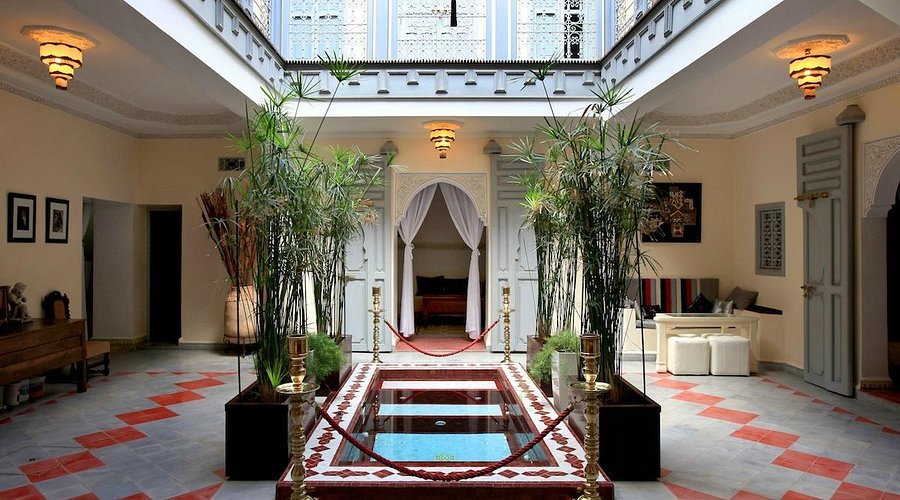
The architecture of a Moroccan riad follows a simple yet highly effective principle: the entire house is organized around an open-air interior courtyard. This central patio forms the heart of the building, with rooms arranged around it across one or several levels. Traditionally, the courtyard takes the form of a rectangular garden divided into four sections by crossing pathways, with a fountain or water basin at the center, a layout inspired by Persian garden design and widely adopted in Islamic architecture.
In most riads, the main living spaces are located on the ground floor and open directly onto the patio. Living rooms and dining areas face the courtyard so that they benefit from natural light and the calm atmosphere created by the garden. Bedrooms are usually located on the upper floors and are reached through galleries or staircases surrounding the courtyard. This layout creates a vertical and symmetrical structure in which every space remains connected to the central heart of the house.
Rooftop terraces complete this architectural arrangement. These terraces often serve as relaxation areas or gathering spaces and sometimes function as small rooftop gardens above the medina. In cities such as Marrakech and Fez, they frequently offer panoramic views of minarets, rooftops, and distant mountains, turning the riad into a peaceful urban retreat within the historic city.
Privacy and Climate Control
One of the most distinctive aspects of the riad is its inward-facing architecture. Unlike many Western houses that open directly onto the street, riads typically have simple exterior walls with very few outward-facing windows. This design reflects an important cultural value in traditional Moroccan and Islamic societies: preserving family privacy and protecting domestic life from outside view.
At the same time, this configuration serves a highly practical climatic purpose. The courtyard acts as a natural ventilation system where warm air rises and escapes through the open top while cooler air circulates through shaded areas and surrounding rooms. Thick walls, stone floors, and the presence of water in fountains or basins help maintain a cooler interior environment compared with the surrounding streets of the medina.
Thanks to this ingenious design, the riad creates its own microclimate. Long before modern air conditioning existed, this architectural system allowed homes to remain comfortable even during Morocco’s hottest summer months, demonstrating the efficiency of traditional Mediterranean and Islamic building techniques.
Materials and Craftsmanship
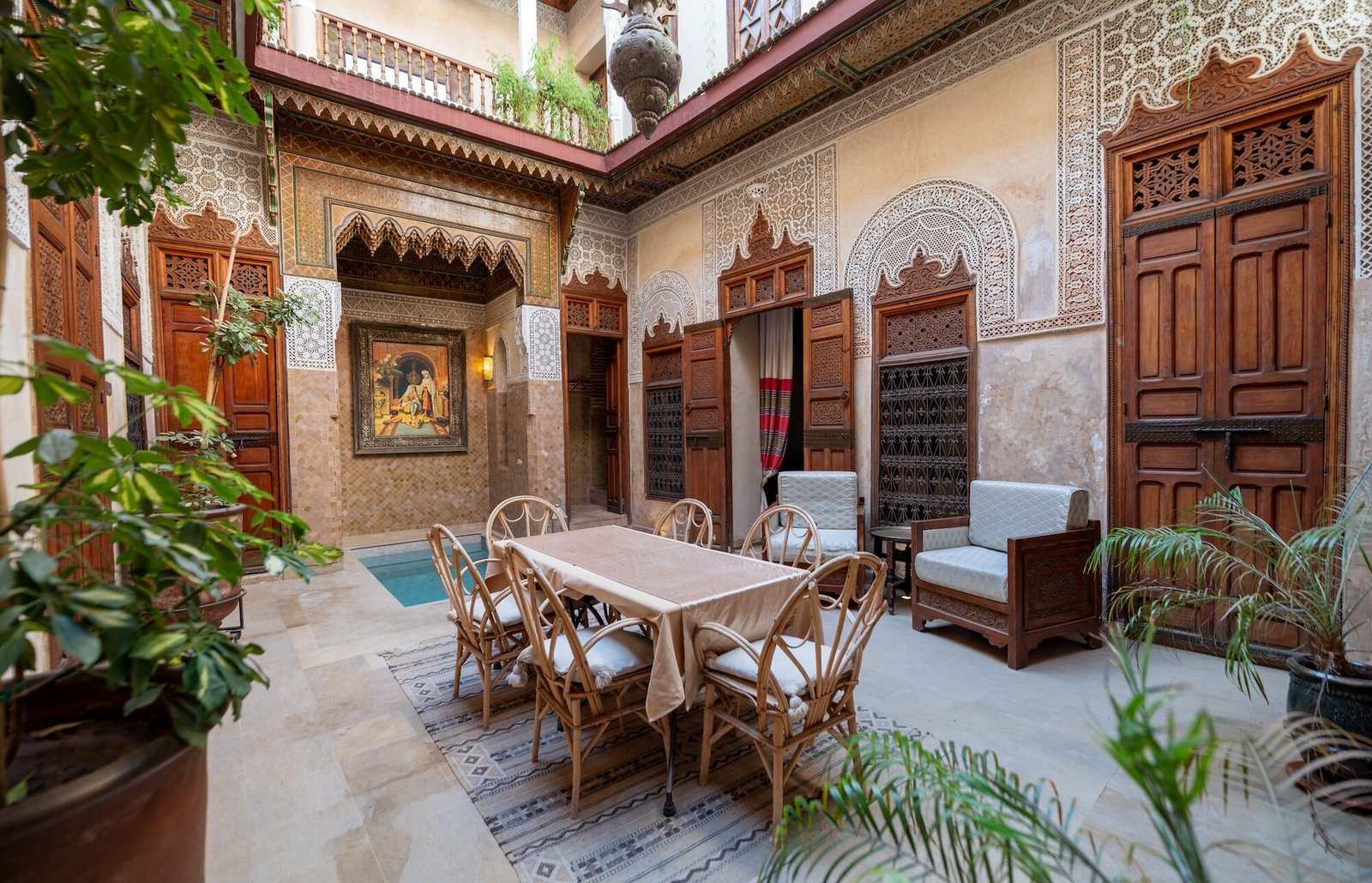
Beyond its structural design, the riad also showcases the richness of Moroccan craftsmanship. Walls and courtyards are often decorated with zellige, intricate mosaics made from glazed terracotta tiles arranged in complex geometric patterns. These decorative elements are not only visually striking but also reflect the artistic traditions of Islamic architecture, where symmetry and geometry play a central role.
The walls are frequently finished with tadelakt, a polished lime plaster known for its smooth and slightly glossy appearance. Doors, ceilings, and galleries are often crafted from carved cedar wood, a material traditionally sourced from the Atlas Mountains. Together with carved stucco and decorative arches, these materials create interiors where architecture and artistry blend into a coherent aesthetic.
In a traditional riad, every architectural element carries meaning. Carved arches, ornamental plasterwork, lattice screens, and decorated ceilings reflect centuries of artisanal knowledge passed down through generations. This combination of architecture, climate adaptation, and craftsmanship is what gives Moroccan riads their distinctive character and explains why they remain one of the most remarkable expressions of Morocco’s architectural heritage.
Evolution and Contemporary Transformations
Decline and Restoration
During the first half of the twentieth century, many riads entered a period of decline. As Moroccan cities expanded and modern neighborhoods developed outside the medinas, wealthy families gradually left their historic homes. This migration led to the abandonment and deterioration of many traditional courtyard houses across cities such as Marrakech, Fez, and Meknes.
A renewed interest in riads emerged during the 1960s and 1970s when artists, diplomats, and foreign cultural figures rediscovered the architectural beauty of Morocco’s historic homes. Influential personalities such as Yves Saint Laurent and Pierre Bergé helped draw international attention to Marrakech and its heritage. Their restoration projects respected traditional materials and craftsmanship, contributing to the revival of the medina’s architectural identity.
From the 1990s onward, restoration accelerated with the growth of cultural tourism. Many historic riads were converted into guesthouses, boutique hotels, or restaurants. This transformation helped revive neglected buildings and support local craftsmanship, although it also created challenges such as rising property prices and the gradual gentrification of historic neighborhoods.
Riads Today: Hospitality and Lifestyle
Modern riads offer travelers a unique and immersive way to experience Moroccan culture. Unlike large hotels located in modern districts, riads are typically found inside historic medinas, allowing visitors to stay in traditional architecture while being surrounded by the daily life of the old city. Today, thousands of riads operate as guesthouses or boutique accommodations, especially in Marrakech.
Visitors choosing a riad can expect a more intimate atmosphere compared with conventional hotels. The typical characteristics include:
- Size and capacity: Most riads contain between five and fifteen rooms, allowing hosts to offer a personalized and attentive level of service.
- Comparison with hotels: Riads provide authentic architecture and a cultural atmosphere inside the medina, while large hotels offer more extensive infrastructure but often less connection with local heritage.
- Cultural activities: Many riads organize cooking classes, hammam experiences, guided tours of the medina, and workshops such as pottery or henna art.
- Price range: A stay can range from around €30 per night in modest guesthouses to several hundred euros in luxury riads depending on design, comfort, and location.
- Accessibility: Because many riads are historic houses, narrow staircases and limited elevators are common, so guests with reduced mobility may need ground-floor rooms.
- Types of riads: Some are authentic historic merchant houses, others are family homes converted into guesthouses, and some are modern constructions inspired by traditional riad architecture.
Riads and the Real Estate Market
The renewed interest in riads has also created a dynamic property market, particularly in cities such as Marrakech, Fez, and Essaouira. Investors and hospitality entrepreneurs increasingly seek historic riads to renovate and convert into boutique accommodations. This trend has helped restore many historic buildings while strengthening tourism in Morocco’s medinas.
At the same time, heritage specialists emphasize the importance of preserving the architectural integrity of these houses. Renovations are encouraged to respect traditional materials such as zellige tilework, carved cedar wood, and tadelakt plaster in order to protect the cultural identity of Morocco’s historic urban landscapes.
Conclusion
Riads are far more than traditional houses. They represent one of the most refined expressions of Moroccan architecture, shaped by centuries of cultural exchange between the Mediterranean world, Andalusian art, and Islamic architectural traditions. Built around a central garden courtyard, these homes were designed to create a peaceful refuge within the dense streets of the medina, combining privacy, climate adaptation, and artistic craftsmanship.
Historically reserved for wealthy merchants, scholars, and urban elites, riads reflected both social status and cultural values. Their inward-facing design, decorative craftsmanship, and carefully organized spaces embodied a way of life where family, hospitality, and tranquility played a central role. Over time, these courtyard houses became one of the defining architectural features of cities such as Marrakech, Fez, and Essaouira.
Today, many riads have been carefully restored and transformed into boutique guesthouses or cultural spaces. This transformation has helped preserve historic buildings within Morocco’s medinas while offering travelers a unique way to experience Moroccan heritage. By blending architecture, craftsmanship, and hospitality, riads continue to embody the timeless art of living that has defined Moroccan cities for centuries.